This summer has offered another reminder that the risks facing our cities are changing.
Extreme heat, wildfires, flooding and disruption to critical infrastructure are no longer exceptional events that can simply be treated as isolated emergencies. They affect how cities function, how communities live and how governments and organisations plan for the future. Recent analysis is also highlighting the growing gap between a city’s exposure to climate risks and its ability to adapt.
But urban resilience is about more than climate.
It is also about the systems we depend on, the way different risks interact, how decisions are made, whether communities are prepared and what happens when something fails.
These questions have been at the heart of the ISRM Global Urban Resilience Project for several years. Developed through work with the International Federation of Red Cross and Red Crescent Societies and the UK National Preparedness Commission, as well as multiple other organisations across the academic, governmental, city management and corporate sectors, the project brings together academic, policy and practical perspectives on how cities can prepare for and manage complex risks.
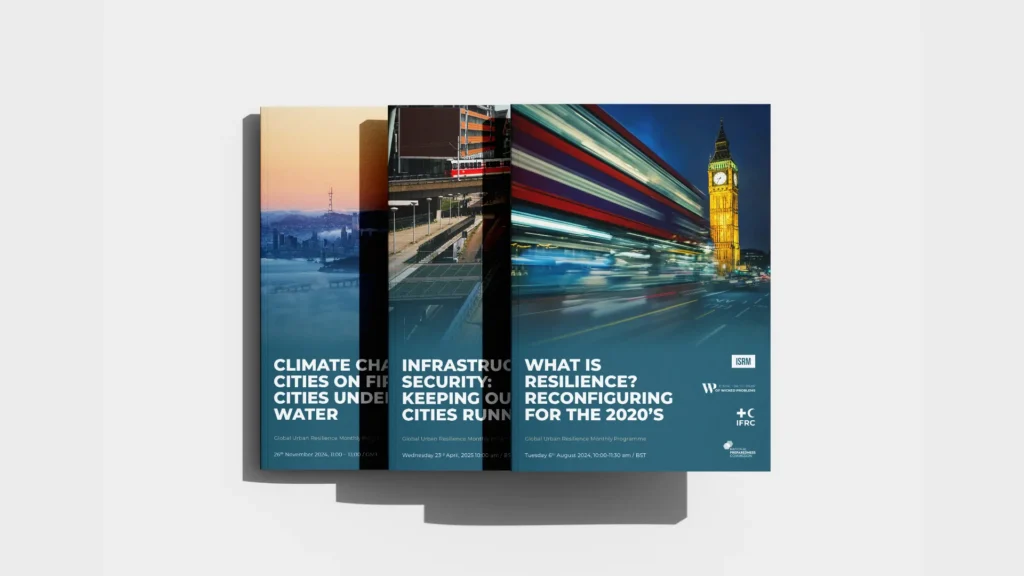
As part of this ongoing work, we are sharing three papers through the ISRM Public Library:
- What Is Resilience? Reconfiguring for the 2020s — looking at what resilience really means and the gap between policy and practice
- Climate Change: Cities on Fire, Cities Under Water — exploring the move from reactive emergency response towards proactive, community-centred resilience
- Infrastructure Security: Keeping Our Cities Running — examining the interdependencies that can turn disruption in one system into a much wider crisis
The questions explored in these papers remain very much with us today.
What does a resilient city actually look like? And are we preparing for the risks we are facing — or the risks we have become accustomed to planning for?
Explore the three papers in the ISRM Public Library.